
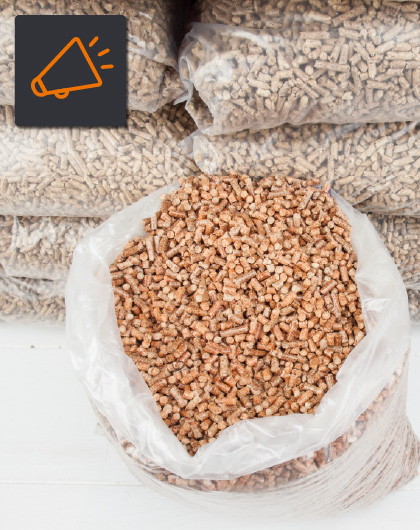
What pellet companies must know about regulation (EU) 2025/40 on packaging and packaging waste
Regulation (EU) 2025/40 introduces the most comprehensive overhaul of packaging rules in decades. The regulation applies to all packaging placed on the EU market, regardless of material, and aims to reduce waste, increase recyclability, and eliminate hazardous substances. For the pellet sector – where bags, big bags, and transport packaging are essential – compliance will require strategic adjustments across design, sourcing, and documentation.
Mandatory Recyclability Grades
From 2030, all packaging must achieve a recyclability performance grade of A (recyclability
higher or equal to 95%), B (recyclability higher or equal to 80%), or C (recyclability higher or equal to 70%). Packaging below grade C will be banned. From 2038, only grade A or B will be allowed. Pellet bags – typically plastic – must be redesigned to meet these criteria, ensuring they can be collected, sorted, and recycled at scale.
Plastic packaging must contain minimum percentages of post‑consumer recycled content, calculated per manufacturing plant and year. The regulation tightens limits on heavy metals and bans PFAS in food‑contact packaging. While pellet bags are not food packaging, the general minimisation of substances of concern still applies. Producers must ensure inks, adhesives, and additives comply with updated chemical restrictions.
Packaging must be designed to use the minimum necessary weight and volume. This affects bag thickness, empty space in grouped or palletised packaging, over‑packaging in transport, double walls, false bottoms, and unnecessary layers will be prohibited.
Harmonised Labelling
All packaging must carry EU‑wide harmonised sorting labels, enabling consumers to correctly dispose of waste. Pellet bags will need clear pictograms indicating the correct recycling stream. This may require redesign of printed artwork and coordination with printers.
Manufacturers must prepare technical documentation proving compliance with recyclability, minimisation, chemical restrictions, and recycled content. Traders importing pellets must ensure their suppliers provide complete documentation, as responsibility lies with the entity placing packaging on the EU market.
Extended Producer Responsibility (EPR)
EPR fees will probably be modulated by Member States based on recyclability grade and recycled content. The better the design is, the lower the fees will be. Pellet producers should anticipate cost differences between compliant and non‑compliant packaging and adjust pricing models accordingly.
Key Dates
2030: recyclability requirements apply
2035: recyclability must be proven “at scale”
2038: minimum grade B required
Full information is available here.