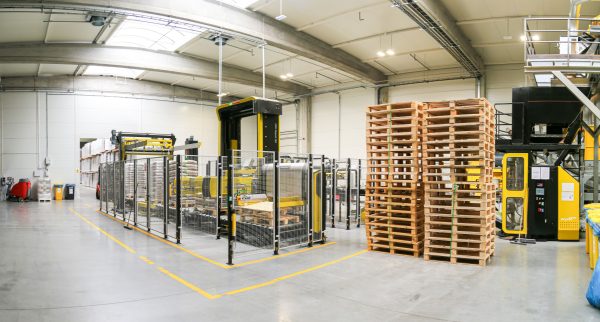
Weathering the Winter: How MMJ Kept Pellets Flowing
The past winter exposed weaknesses in Poland’s pellet supply chain, but the pellet producer MMJ managed to maintain stability thanks to its controlled raw material sources and strategic planning. We had the opportunity to talk about it with the Director of Biofuel Sales – Paweł Pawłowski.
Hello Pawel, tell us a little about the history of MMJ? When was it founded?
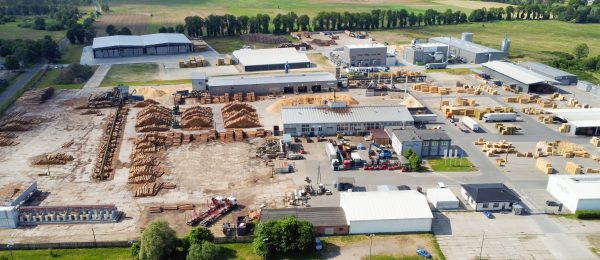
For several years, Patria-TOP, a subsidiary of the capital group, has been involved in wood processing at its own sawmill, producing and exporting garden architecture to Western Europe. It was a natural progression to use the resulting biomass. This is why MMJ Biopaliwa was established; initially producing briquettes, the company quickly verified its initial assumptions in response to changes taking place on the market. The increasing demand for pellets prompted us to start producing them in 2021. The obvious market for our products was the garden architecture industry, where we already had an established position. From 2025, MMJ Biopaliwa’s Management Board has decided to diversify sales in order to support the growing demand on the domestic market.
The remaining biomass from the production process of specific products is sold as wood chips for fuel or paper production, whilst bark is sold on the local market, supporting commercial and manufacturing companies in the region.
This winter has been challenging for the Polish market due to the increase in pellet prices, some traders and producers have admitted that they have run out of stocks too. How has this situation affected MMJ and how has the company overcome these challenges?
The last winter was indeed challenging for the entire pellet industry. Increased demand for existing installations due to lower temperatures, coupled with the arrival of new installations, resulted in demand exceeding supply. It should be noted that the amount of pellets available on our market from neighbouring Ukraine has significantly decreased in previous seasons.
Until now, a significant proportion of our production has been exported, but last year we decided to expand into the domestic market. It is important to us that, whilst maintaining similar sales prices, we minimise the carbon footprint associated with the transport of our pellets. The closer we deliver to the place of production, the lower the consumption of fossil fuels. We are determined to supply as many pellets as possible to the domestic market in the upcoming heating season.
What benefits does MMJ offer to pellet consumers?
We have our own sawmill, so we have our own supply of raw materials. This guarantees the stability and consistency of our pellets. The ENplus® and DIN Plus certificates are proof of this. Our large warehouse space enables us to guarantee better availability to our customers in the autumn and winter season. The focus is on providing the highest possible level of service, enabling us to respond efficiently, quickly and flexibly to market demand.
MMJ obtained ENplus® certification a few years ago. What motivated you to become certified and why do you consider it important?
For many customers, quality is synonymous not only with a recognised brand, but also with a guarantee of product quality. This is guaranteed by the ENplus® certificate. Many individual and institutional customers are aware of the benefits of holding an ENplus® certificate, and some even require it when choosing from the wide range of pellets on the market.
Being awarded the certificate grants the right to use a brand already familiar to many, but it also imposes an obligation on the manufacturer to meet all the quality requirements set by the standards. Regular inspections and positive assessments confirm that everyone involved in the pellet production process is highly aware of their responsibilities.